Hopeful joins panel on citizenship and justice in the face of the climate crisis at Tecnopuc Experience 2026
The session brought together experts in disasters, sustainability, law and innovation to discuss inequality, institutional responsibility and the challenges of climate adaptation.
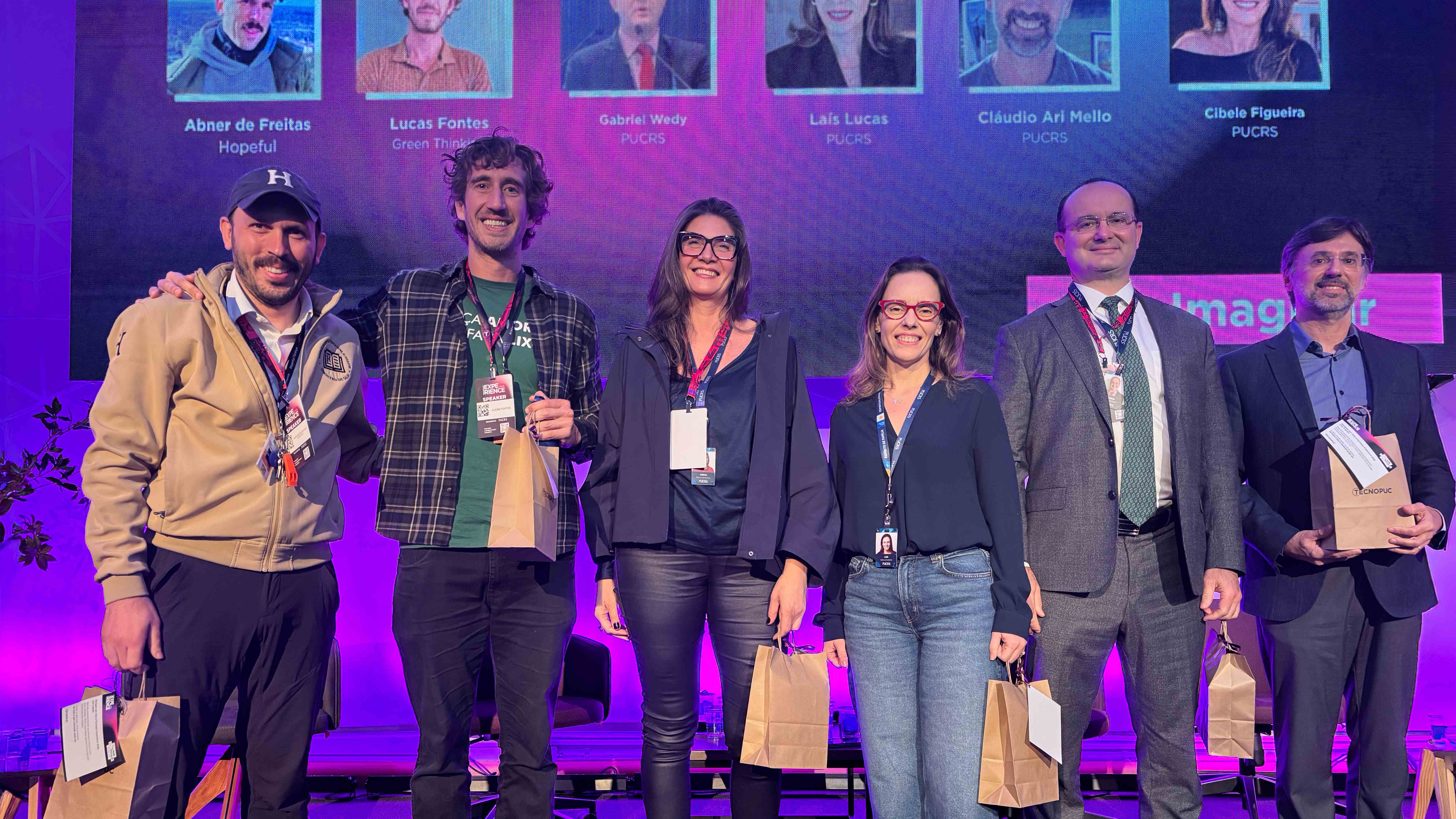
Porto Alegre (RS), October 21, 2026 — Hopeful took part in Tecnopuc Experience 2026 as a member of the panel “Citizenship and justice in the face of the climate crisis”, held in Porto Alegre. The session brought together representatives from academia, the innovation sector and public institutions to discuss the social impacts of disasters and the need for fairer, more effective responses to climate change.
Represented by its CEO, Abner de Freitas, Hopeful contributed to the discussion drawing on its experience in disaster epidemiology, institutional preparedness and emergency management, including its work during the floods that struck Rio Grande do Sul in 2024.
Who suffers, who responds and who transforms?
The panel was organized around three lines of reflection: who suffers the impacts of the climate crisis, who is accountable for risks and damage, and who can change this reality.
The first addressed inequality in exposure to disasters, highlighting how socioeconomic conditions, demographic characteristics and territorial vulnerabilities shape the harm populations experience.
The second discussed the responsibilities of the State, the Public Prosecutor's Office and the Judiciary in preventing known risks, protecting rights and responding to the consequences of extreme events.
Finally, the third explored the role of active citizenship, community participation and innovation in building solutions that reduce risk and strengthen society's capacity to respond.
Disasters don't end when the water recedes
A central theme of Hopeful's participation was the need to understand disasters beyond their immediate impacts.
The 2024 floods showed that the consequences of a disaster do not end when the water recedes or essential services are restored. Illness, psychological distress, interrupted treatments and barriers to health care can persist long after the emergency.
This perspective reinforces the importance of disaster epidemiology in identifying, measuring and understanding how exposure to extreme events affects population health.
Another point raised in the discussion was the link between inequality and the burden of disease. Human harm is not distributed evenly: age, disability, income, location and access to information can all influence risks and health outcomes.
Preparing for disasters takes more than plans
Hopeful's contribution also addressed the limits of traditional preparedness and response tools.
Contingency plans are essential, but real disasters often present conditions that exceed the scenarios originally anticipated. Institutional preparedness must therefore account for adaptive capacity, coordination between organizations and decision-making in unexpected situations.
The discussion also proposed a critical look at the concept of resilience. While essential for facing adversity, resilience cannot be used to normalize avoidable risks or to place sole responsibility for protection on communities.
Drawing on Brazilian and international experience, Hopeful advocates building institutional and community capacities that make it possible to anticipate risks, protect lives and continuously improve response systems.
Innovation, citizenship and collective responsibility
The panel featured Lucas Fontes of Green Thinking; Gabriel Wedy, Laís Lucas, Cláudio Ari Mello and Cibele Figueira of PUCRS; and Abner de Freitas of Hopeful.
The range of perspectives brought together topics such as urban planning, waste management, legal responsibility, fundamental rights, social technologies and disaster management.
For Hopeful, taking part in this dialogue is an opportunity to connect scientific knowledge with the real needs of governments, organizations and communities.
Facing the climate crisis takes more than responding to disasters: it requires understanding who is exposed, why certain populations suffer more and which decisions can prevent the same harm from happening again.
Hopeful's participation in Tecnopuc Experience 2026 reaffirms its commitment to producing knowledge, advancing technological innovation and developing solutions for a society better prepared for disasters.
About the event
Event: Tecnopuc Experience 2026 Panel: Citizenship and justice in the face of the climate crisis Date: October 21, 2026 Location: Porto Alegre, Rio Grande do Sul, Brazil Participant: Hopeful — Abner de Freitas, CEO